Ordo Universi · Self Leader
13 ﹁
The Magi and Twelve Followers
Degrees 1–19
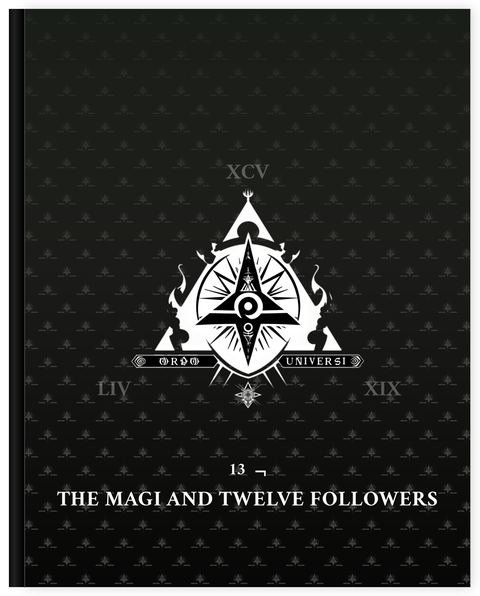
The Twelfth Untying taught you to count your own tribes. The Thirteenth asks the harder question: who governs them?
13 ﹁ The Magi and Twelve Followers is the thirteenth of the ninety-five untyings of the Order of the Universe, and it turns from census to governance — from knowing the self's many parts to ruling them well. The knot of this degree is Lewdness — not appetite itself, but the whole self dragged in every direction at once by its own ungoverned wants, a figure at the center of a wheel of pulling hands. The untying is Discipline: not the murder of appetite but its rule, the wild fire housed rather than doused, the hands that once pulled outward now gathered around a single tended flame.
This is a full monograph of sixty-three pages with twelve engraved plates, moving through the number thirteen on every level the Order recognizes:
The Mythological — Judas as the thirteenth seat turned traitor at the Last Supper; the witches' coven's thirteenth office of the presiding priest or priestess; the thirteen lunations that force the solar year's twelve months to admit a corrective month, Adar Sheni among them; the Tarot's unnamed thirteenth trump, Death the transformer; Loki as the uninvited thirteenth guest whose ungoverned appetite breaks the peace of Valhalla; and the baker's dozen, the thirteen colonies, and the whole folklore of a settled twelve disrupted by a governing thirteenth.
The Spiritual — the Desert Fathers' askesis, training rather than punishment; Benedict's Rule, which gives appetite a schedule rather than a verdict; the yogic tapas, heat that refines rather than destroys; the Sufi mujahada and the nafs's ascent from ammara to lawwama to mutma'inna; the tantric and alchemical arts of transmutation, and Freud's own borrowing of their vocabulary in sublimation; and the discipleship every tradition insists on — a governing office worn, for a season, by a teacher.
The Numerological — thirteen's refusal of twelve's easy divisions; its primality, met now on the far side of a completed order rather than before one, as eleven's was; the year's four thirteen-week quarters; the Tarot's Death card, unlabeled in the oldest decks; the baker's dozen and the thirteen colonies read as governing additions rather than disruptions — together with the digit-root return to Foundation, thirteen as Foundation re-founded, and the Order's own reading, where thirteen is nabeov and the count is sixteenfold.
The Developmental — the Age of Thirteen: the bar and bat mitzvah and Christian confirmation, timed to meet appetite's true arrival; van Gennep's rites of passage and Turner's communitas; the Tanner stages and the hormonal surge that meets a still-unfinished prefrontal brake, in Steinberg's account of the accelerator built years before the brakes; Plato's charioteer handed the reins for the first time; and the knot tied two ways — the appetite shamed into hiding, and the appetite left entirely without a rein.
The Operative — the difference between rule-bound compliance and owned virtue; the twin failures of repression and indulgence, partners rather than opposites; four practices that carry discipline into daily governance — the rule, the fast, the kept commitment, and transmutation, the xenden becoming xendena; and a sustained twenty-one-day practice for the Self-band initiate: the naming of one ungoverned appetite, and its patient conversion into an ally.